OUR POSITION
Common practice is not necessarily the best answer.
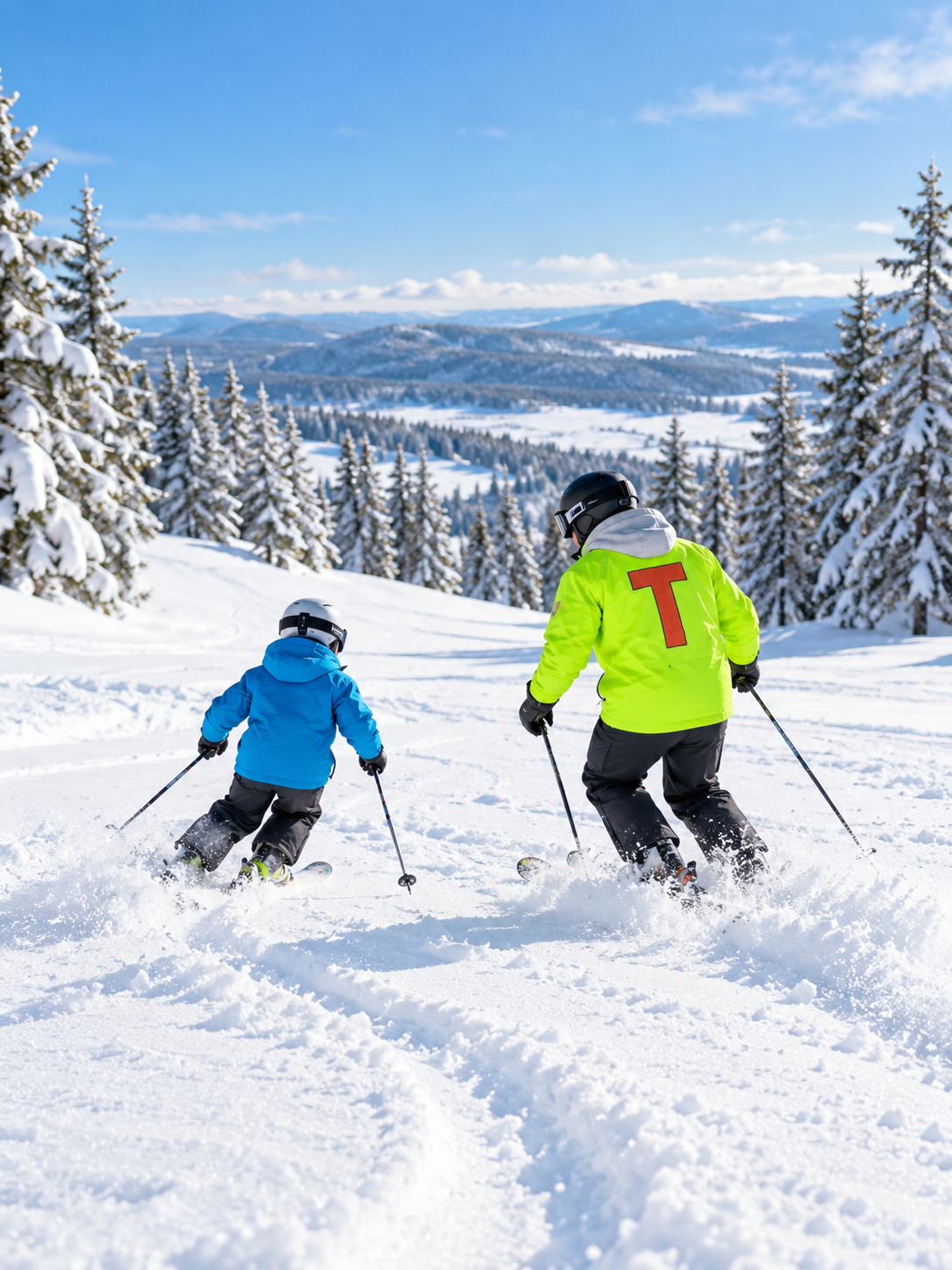
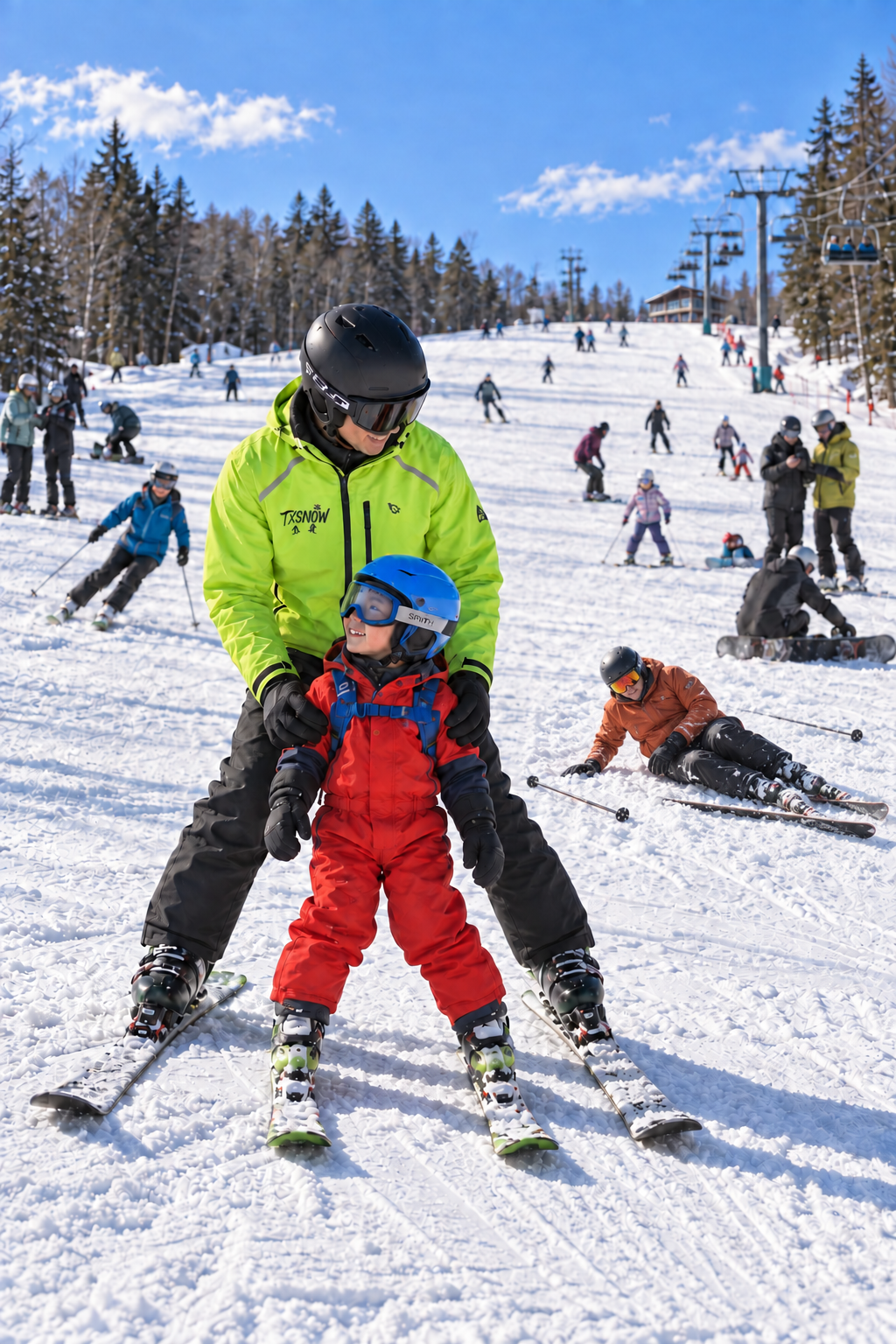
One-to-one for children under 12 is not TXSNOW’s premium positioning. It is our baseline for child safety.
We are not opposed to industry tradition. We know that children’s group sessions are common. But common practice is not necessarily the best answer. We believe that when tradition conflicts with children’s safety, someone should be willing to make a choice first.
01 / SUPERVISION
Teaching a group of children isn’t easy.
However professional a group instructor may be, they still have only one pair of eyes and one pair of hands. They cannot chase one child, help another up and watch everyone else at the same time.
01After 13 days in a coma: a child left beyond the instructor’s sight2003.01.12 · Read the case
Appeal judgment · 2010 QCCA 1509
People and setting
On January 12, 2003, a nine-year-old beginner, identified as X in the judgment, joined a ski session at Mont Olympia, Québec. A 17-year-old instructor, identified as Z, was responsible for eight beginners aged eight and nine.
What happened
Near the end of the session, one child became frightened and stopped partway down the slope. The instructor stayed with that child and told the other seven, including X, to ski down alone to meet their parents. From her position, she could see neither the whole slope nor the meeting area. She gave no precise route or instructions for the descent. X apparently lost control, left the trail and entered the woods; no one witnessed the collision.
Consequences
The child sustained severe head and lung injuries. Contemporary reporting described a skull fracture and two punctured lungs. His heart stopped for 18 minutes, and he remained in a coma for nearly 13 days. He was left with serious, permanent neurological and cognitive impairments affecting his future earning capacity.
Legal outcome
The trial court found the resort companies liable for the instructor’s fault. It awarded C$2,364,169 to the parents as the child’s legal guardians and more than C$300,000 to the parents personally. The Québec Court of Appeal upheld the core liability conclusion. More than seven years elapsed between the accident and the appeal judgment; this was not a seven-year trial.
02Lily Leblanc: a fatal entanglement during a three-child group session2023.01.29 · Read the case
People and setting
On January 29, 2023, six-year-old Lily Leblanc was taking a ski session at Val Saint-Côme, Québec, in a group of three children with one instructor.
Sequence of events
- Another child in the group fell while travelling uphill on the T-bar.
- To keep the group together, the instructor asked Lily and the other child to get off while the T-bar was still moving.
- Lily fell as she tried to get off. Her coat hood caught on the lift.
- The lift was stopped, then restarted without confirming that Lily was safe. This restart is an important part of the investigation report.
- She was dragged approximately 540 metres, or 1,770 feet. The instructor’s attention was divided by the other child’s fall.
- Lily died from asphyxia caused by prolonged pressure from her coat around her neck.
The investigator called on Canadian and provincial ski and snowboard instructor associations to improve training and urged a review of ways to provide more staff during children’s sessions.
02 / THE INDIVIDUAL CHILD
When keeping the group together creates another risk.
Many ski schools emphasise keeping children together so no one becomes separated. That sounds reasonable. In Lily’s case, however, this logic led to a dangerous decision: asking young children to get off a moving T-bar to prevent the group from splitting. The investigation report exposed this conflict.
Keeping the group together is often treated as a safety principle. But when that principle conflicts with an individual child’s safety, who takes priority?
For TXSNOW, the basic unit of a children’s session should be the individual child.
Official recommendations
Investigator Julie-Kim Godin called for changes in staffing, training and supervision, including:
- Examining ways to have more staff available during children’s sessions.
- Increasing instructor and staff coverage during children’s sessions so that someone can intervene quickly when a child separates from the group or needs help.
- Calling on the Canadian Ski Instructors’ Alliance and provincial instructor bodies to review teaching methods, particularly instruction and supervision around lift use.
The choice TXSNOW makes
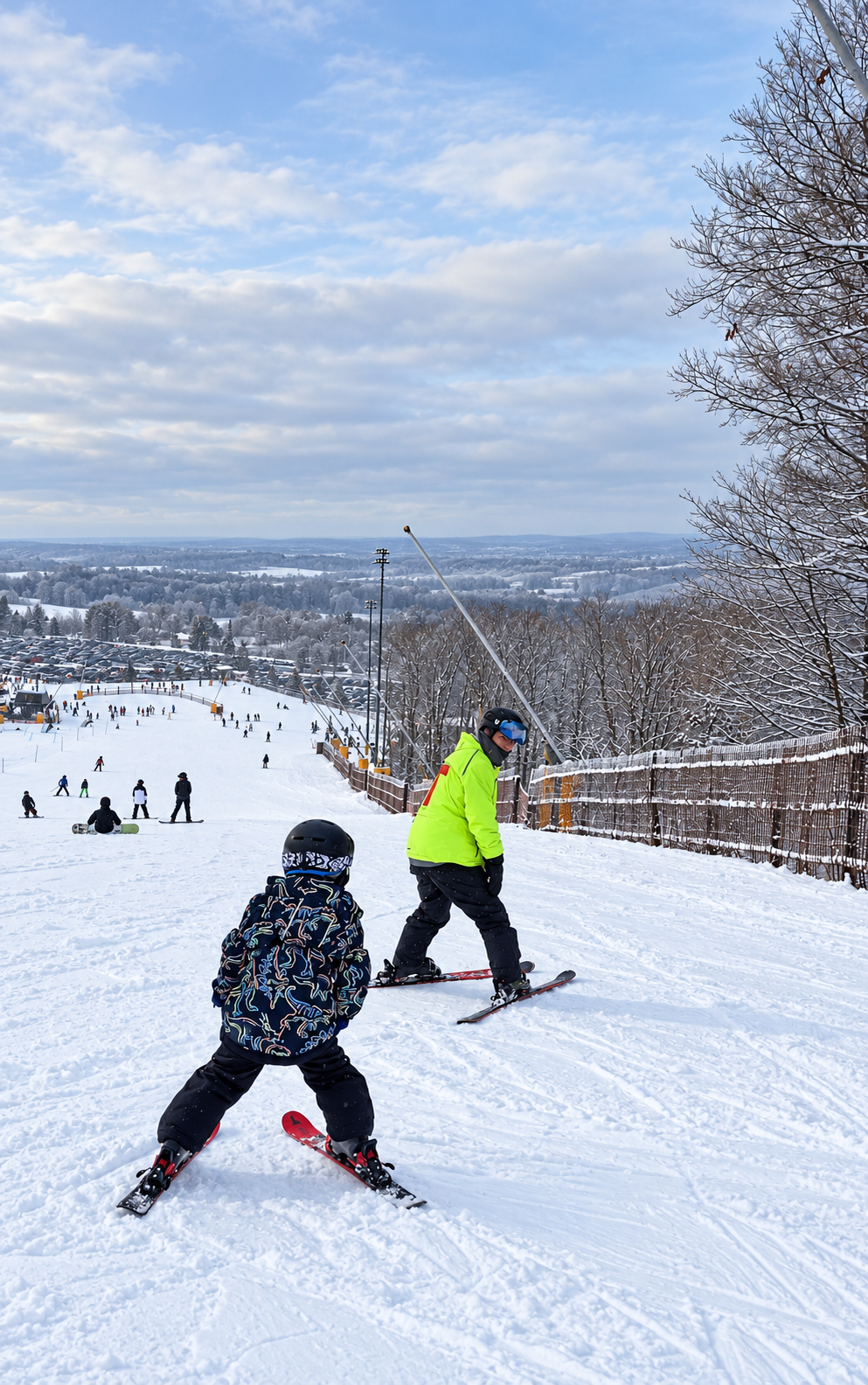
In TXSNOW’s view, assigning one instructor to one child is the most direct and dependable way to make individual intervention available without waiting for staff to be reassigned.
We therefore take this principle further: children under 12 do not take group sessions with TXSNOW. We require one-to-one teaching.
03 / FURTHER CASES
Group activities also need safety supervision.
03Elisabeth Reurink: a fatal tree collision and a C$2 million claim2009.03.05 · Read the case
Reported death · Lawsuit allegations, not established findings
People and setting
On March 5, 2009, 17-year-old Elisabeth Reurink, a student at Catholic Central High School in London, Ontario, was taking part in a school ski trip at Blue Mountain in Collingwood.
What happened and the claim
She struck a tree while skiing and died. In 2011, her family filed a C$2 million lawsuit against the resort, the London District Catholic School Board, school officials, a physical education teacher and two unnamed ski instructors. The claim alleged inadequate instruction and pressure to ski terrain beyond her ability. These were allegations, not findings established in the cited reporting; the amount was a claim, not an award.
Consequences and community response
Reporting on the claim described catastrophic injuries to the aorta and brain stem. After her death, the school board cancelled its remaining ski trips for that year and reviewed its policies. Grief counsellors were made available at the school.
04Boo Sung “James” Moon: a fatal tree collision on a school outing2009.02 · Read the case
Contemporary news reporting
People and setting
In February 2009, 13-year-old Korean exchange student Boo Sung Moon, known as James, took part in an annual ski outing for Grade 7 and 8 students from Richmond Hill, Ontario, at Snow Valley.
What happened and the consequences
He left the trail and hit a tree. He was found unconscious and unresponsive and later died in hospital. Contemporary reporting said that he was not wearing a helmet.
Wider impact
His death occurred shortly before Elisabeth Reurink’s. Coverage described several serious incidents involving young people at ski resorts over a short period and renewed calls for mandatory helmets for children.
04 / LIFTS & RESPONSE
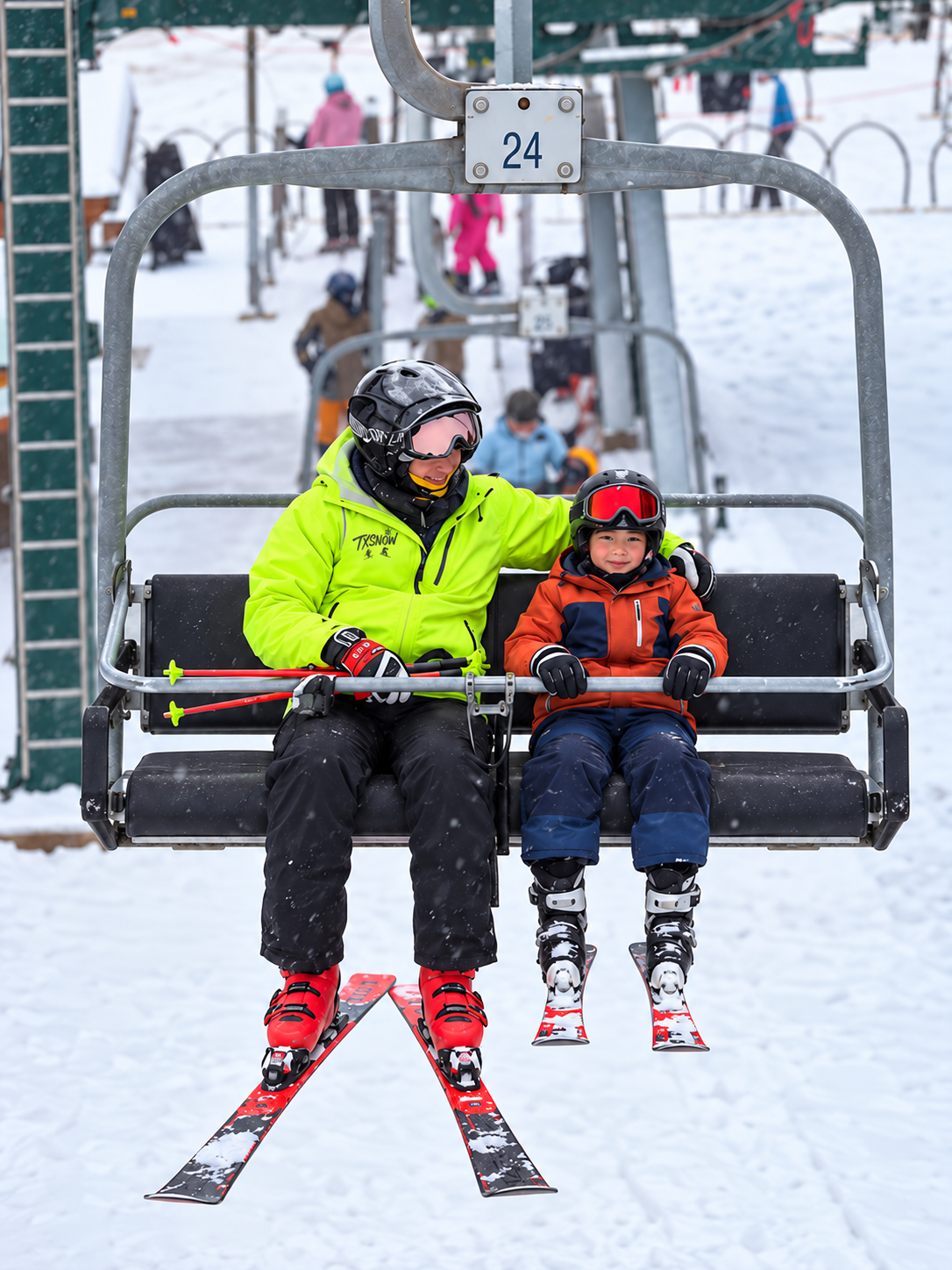
Supervision continues
between runs.
05Ski Apache: a child lift incident2026.01.06 · Read the case
Confirmed information
On January 6, 2026, Ski Apache near Ruidoso, New Mexico, responded to an incident involving a child. General manager Ken Marlatt confirmed the death. Ski Patrol provided immediate emergency care. The child was taken by ambulance to hospital and then airlifted for further treatment. During the flight, the helicopter made an emergency landing in Alamogordo, where the child was pronounced dead.
Reported details and what remains unknown
Some local coverage described a lift-related accident. Reporting also referred to a family social-media post saying the boy had been celebrating his birthday. The resort’s statement did not identify the precise mechanism. Whether the child was riding alone, fell from a lift or was dragged has not been reliably established in the sources reviewed.
06Megan Bell: a chairlift incident2026.02.11 · Read the case
Resort statement and reporting · No final responsibility finding cited
People and setting
On February 11, 2026, 13-year-old Ottawa student Megan Bell was on a school ski trip at Centre Vorlage in Wakefield, Québec.
Incident and consequences
She became caught at the top unloading area of a chairlift and suffered critical injuries. The resort confirmed an incident at the unloading area of lift B during a school visit. She died four days later, on February 15. Reporting described clothing becoming entangled; the family identified her hood.
Investigation status
CBC reported on September 11, 2026 that police had referred the case to prosecutors for review. This is an investigative development, not a verdict or a final finding of legal responsibility.
05 / COLLISION RISK
“Torpedo” collisions:
On crowded slopes, risk can also come from others.
On a busy slope, a child’s safety also depends on the movements of other skiers and riders. The expression “torpedo” describes someone moving into another person’s space at dangerous speed or with poor control or judgment.
07Juliana Kane: an incident on a beginner slope2013.04.17 · Read the case
Reported collision · Lawsuit allegations
People and setting
On April 17, 2013, five-year-old Juliana Kane from Massachusetts was in a six-child ski group on the Interstate beginner trail at Jay Peak, Vermont. The snowboarder who struck her was William Vincent, who had worked as a snowboard instructor at the resort. Whether he was still employed there was disputed.
What the family alleged
According to the lawsuit and reporting, Vincent came downhill at high speed and collided head-on with Juliana. The family also alleged that the ski instructor had stopped the group where approaching skiers had poor visibility and failed to look uphill before leading the children off. These are allegations, not adjudicated findings presented here.
Injuries and the resort’s response
The court filings listed a liver laceration, concussion, a partially collapsed right lung, pulmonary contusion, hearing loss, damage to the left inner ear and continuing injuries. The resort said Vincent had been dismissed a week before the collision; the family’s claim treated him as an employee or agent.
OUR CHOICE
One child.
One dedicated instructor.
Strict one-to-one teaching for children under 12 is TXSNOW’s choice for child safety.
These individual cases are not a statistical comparison of session formats. One-to-one attention does not eliminate the inherent risks of snow sports or replace suitable terrain, equipment checks, lift procedures and emergency preparation.
Next: Why must instructors’ hours of experience with children be verified?