OUR STANDARD
We do not accept “a certificate means you can teach any child” as the minimum standard.
Children’s ski instruction is not a job someone automatically becomes proficient at by passing Level 1. It takes substantial experience with real children to develop reliable judgment about age, risk, routes, emotions, lift use and unexpected situations.
- Age-appropriate judgment
- Anticipating risk
- Choosing a route
- Supporting emotions
- Managing lift use
- Responding to the unexpected
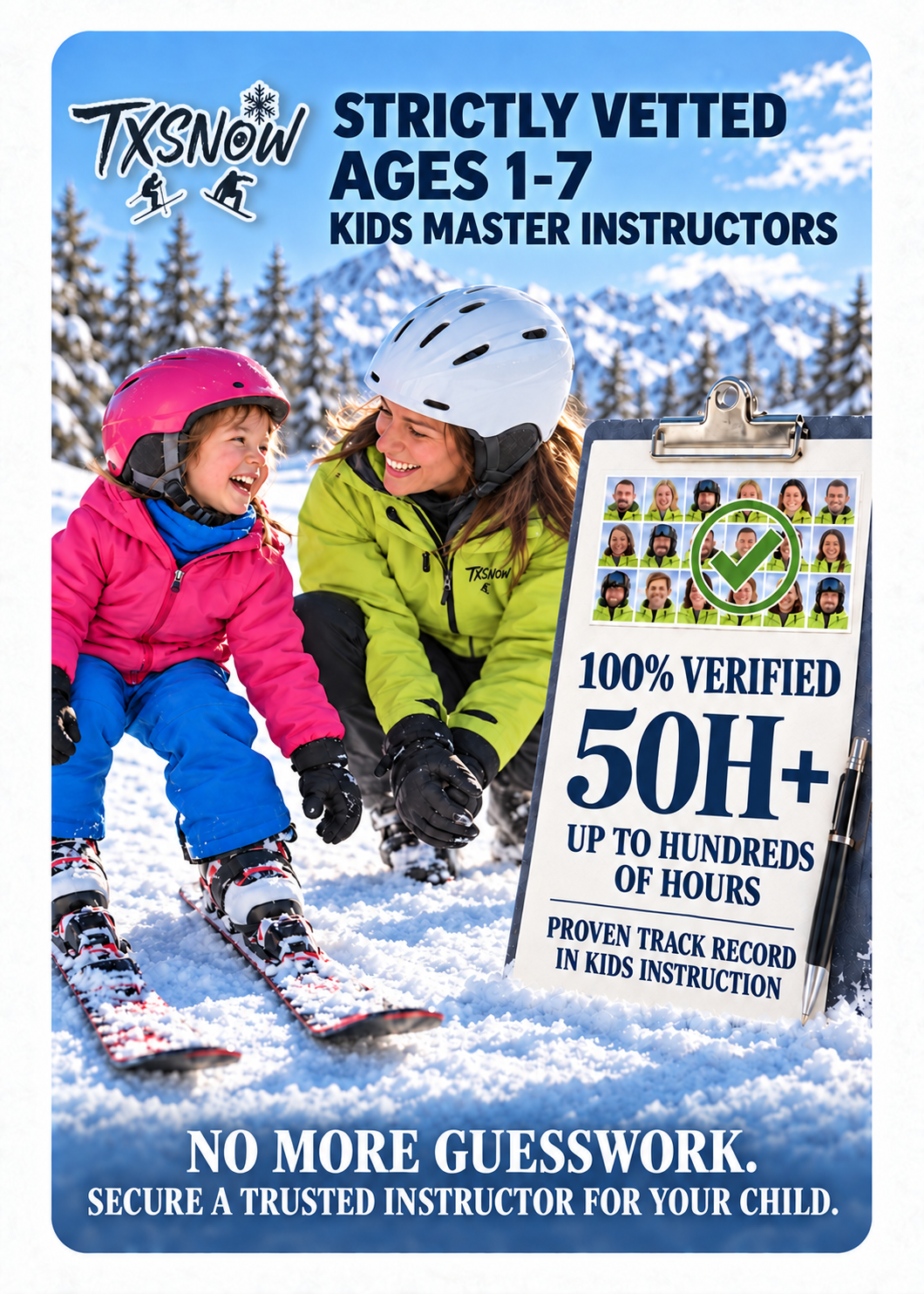
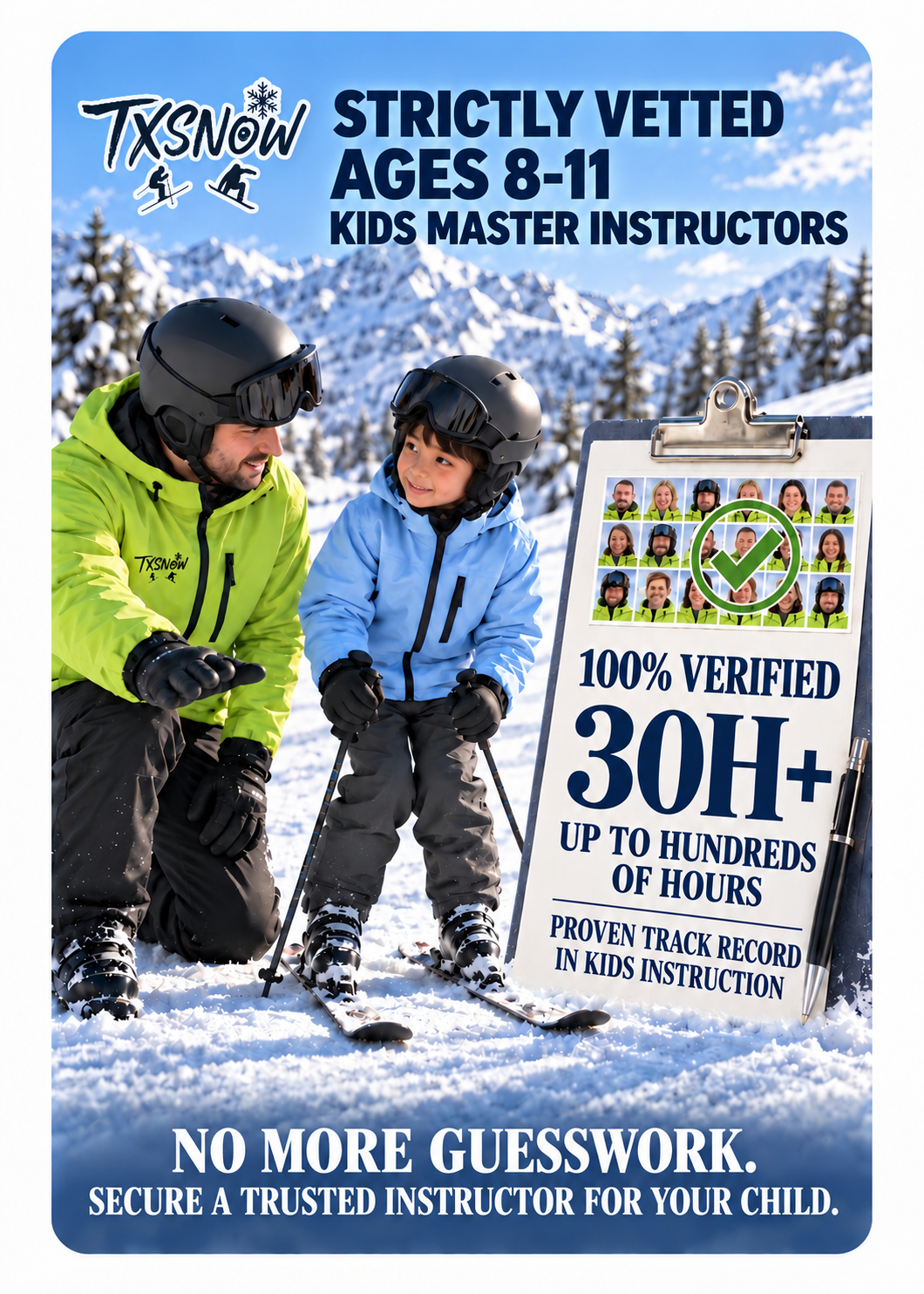
TXSNOW requires Kids Master (KM) instructors to have real teaching hours with children in the relevant age group.
01 / INDUSTRY BACKGROUND
The three-day Level 1 certification program does not involve teaching real children in the training group.
For example, the Canadian Ski Instructors’ Alliance (CSIA) and the Canadian Association of Snowboard Instructors (CASI) describe their Level 1 programs as three-day entry-level certifications, including training and assessment in teaching, safety and technical skills. During these three days, candidates take turns playing the role of students as they learn how to teach children.
Participants who complete the three-day training and pass the assessments can obtain Level 1 certification, without a prerequisite for real experience teaching or working with children. Both CSIA and CASI explicitly state in their official FAQs that people with no teaching experience can take Level 1, and describe the training as preparing them to deliver a great first teaching experience. TXSNOW has therefore chosen to add this requirement: we look at an instructor’s certification and whether they have actually worked with children in the age group they will teach.
02 / PEOPLE WHO ENJOY WORKING WITH CHILDREN
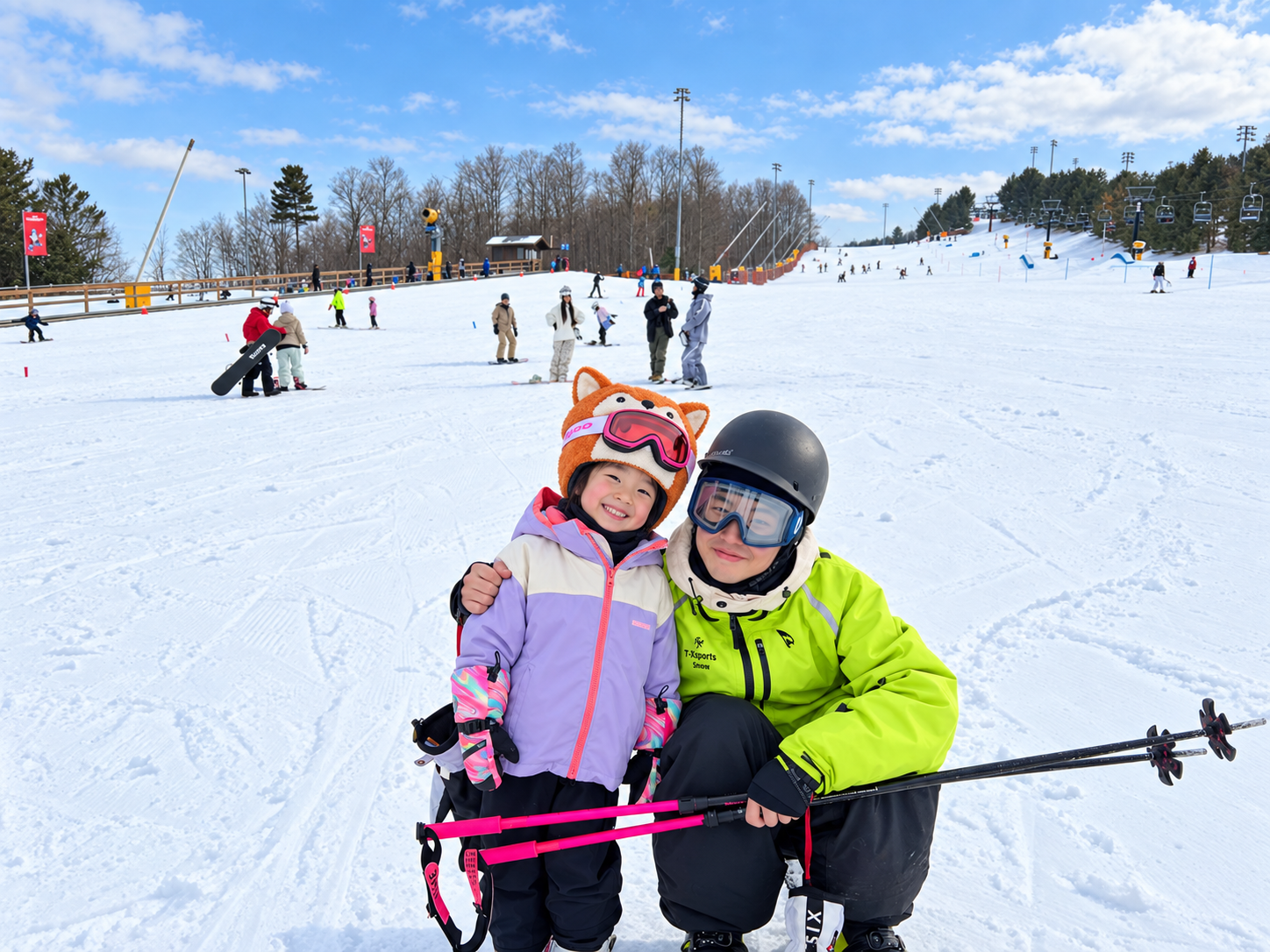
They know how to teach skiing—and how to connect with children.
Many adults who have had little experience with children recognise the feeling: in a room full of young children, they are not quite sure how to relate to them. Adults accustomed to logic and reason can find communicating with children difficult.
For TXSNOW, the question is the instructor’s real experience with children of that age. Skiing ability alone does not establish an ability to understand fear, respond to a meltdown or recognise when a child has misunderstood an instruction.
03 / INDUSTRY PRACTICE
New instructors are often assigned to children’s sessions to build their experience.
Children’s sessions make up the largest share of ski-school teaching.
Children’s sessions are an important part of ski-school operations. They can account for 75% or more of a school’s sessions, creating a substantial demand for children’s instructors. Some new instructors have been told directly:
Your first year will probably be spent mainly teaching children.
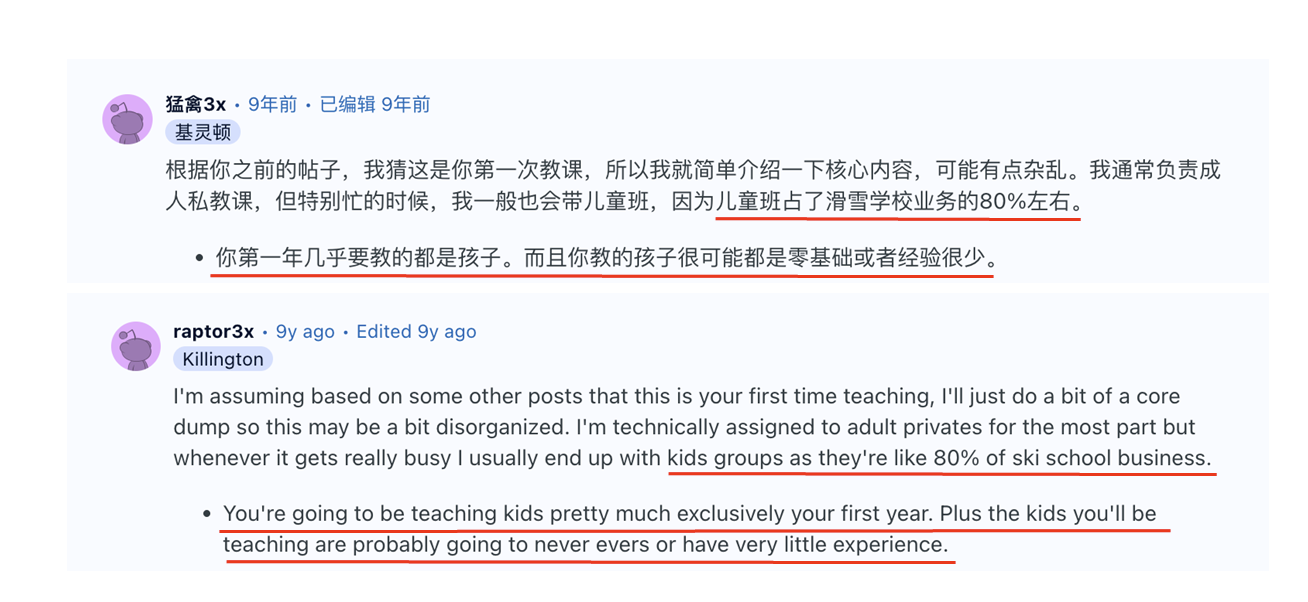
A longstanding industry path: new instructors begin with children or beginners and build experience on the job.
Ellen Osterling formerly led the children’s ski and snowboard program at Crested Butte, a well-known ski resort in Colorado.
She publicly described an old industry idea: “all new instructors teach kids first.” She also made clear that this approach was detrimental to children.
In other words, “new instructors teach children first” is not a concern parents have simply imagined. It is an approach that has existed within the industry and has been openly questioned by a program leader.
Other contributors describe resorts hiring people who are not yet certified or have little teaching experience, then using on-the-job training to help them learn to teach young beginners.
Helen Olsson · Article quoting Ellen Osterling (2004; republished 2011) Instructor accounts · Training new hires on the jobInstructors may be assigned to children’s sessions without experience working with children.
Many new instructors describe spending their first one or two seasons mainly teaching children’s groups or beginners.
- Some instructors with parenting or childhood-education experience report that colleagues with little experience around children were already being assigned mixed-age groups of six- to thirteen-year-olds.
- Others say that the volume of children’s sessions and the demand for staff have made starting new instructors with children a default path at many ski schools.
These public discussions cannot replace formal industry reports, but they highlight a reality worth parents’ attention: a children’s session does not automatically come with a higher experience requirement for the instructor. Under the pressure of high demand and heavy schedules, children may instead be among the first students a new instructor teaches.
Public discussion · A new instructor’s first season Public discussion · Experience with children and early teaching assignmentsA mother’s real question:Read the account and original screenshots
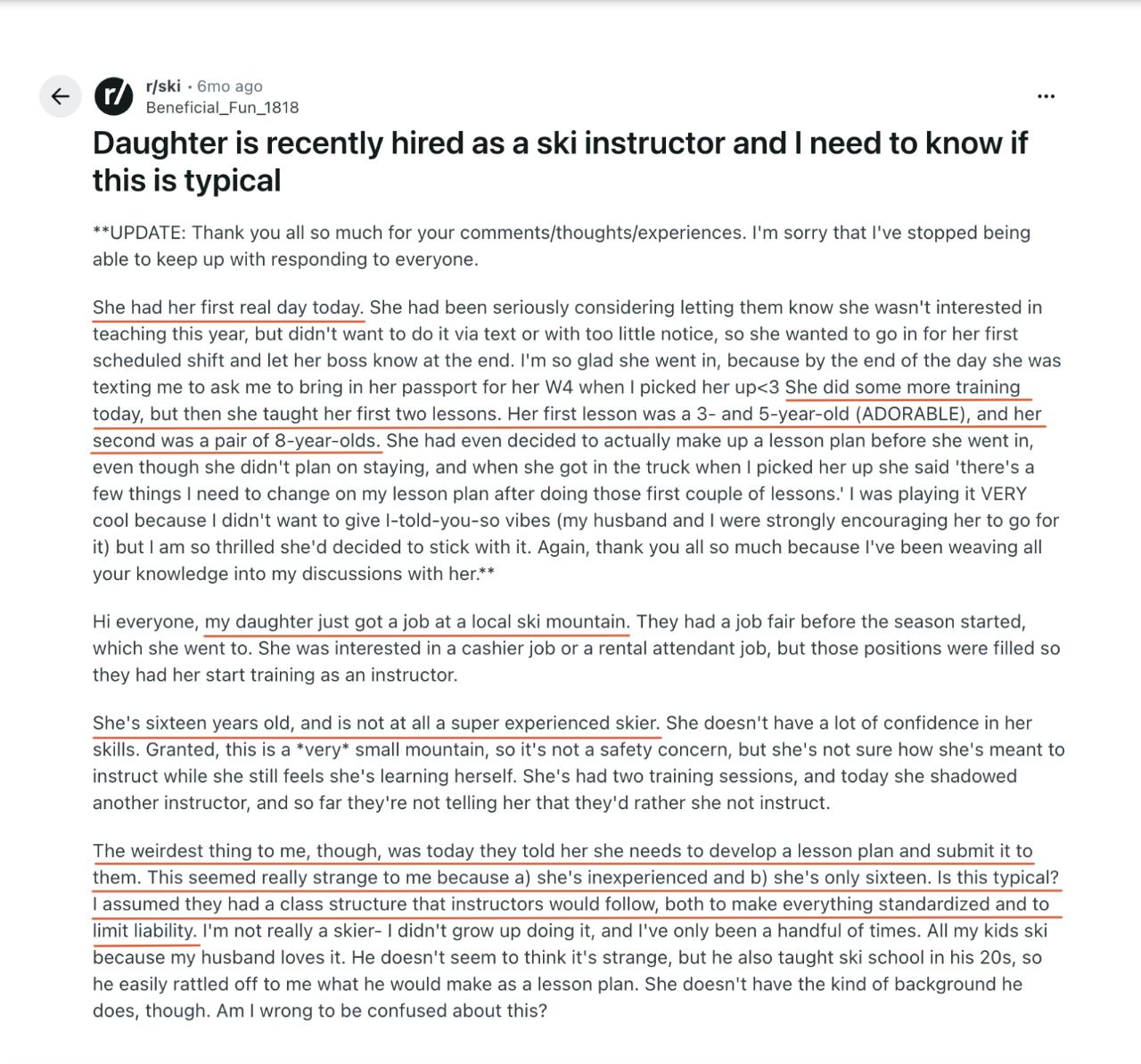
A mother posted on a public forum that her 16-year-old daughter had just been hired as a ski instructor at a local resort.
Her daughter had limited skiing experience and little confidence in her own ability. After two training sessions and one day shadowing another instructor, the ski school asked her to create and submit her own teaching plan.
The mother was puzzled:
Why was a 16-year-old new instructor with limited teaching experience being asked to design children’s sessions herself?
In an update, the mother said that her daughter’s first day of teaching included a three-year-old and a five-year-old in one session, followed by two eight-year-olds in another.
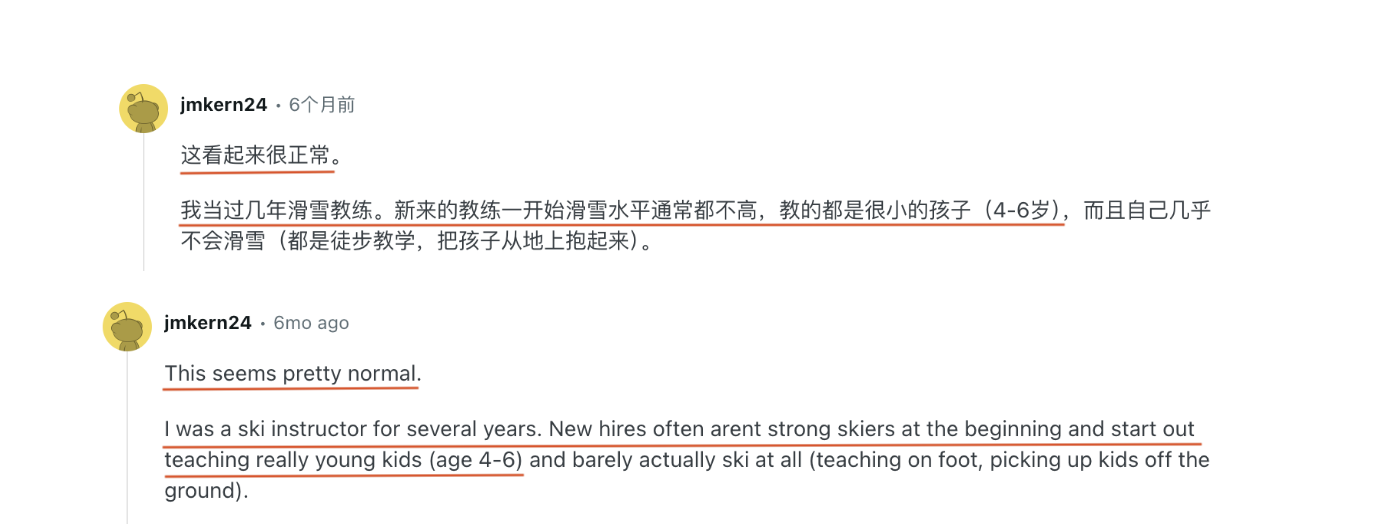
In North America, even everyday babysitting calls for checking qualifications and experience. Ski instruction should, too.
TXSNOW believes that real experience with children should be a specific requirement, not an optional extra.
